Media Shot Analysis by Seb Wright on Scribd
Showing posts with label G321 Thriller research. Show all posts
Showing posts with label G321 Thriller research. Show all posts
Friday, 21 April 2017

Sunday, 19 March 2017
Independent study - How do directors use techniques within a claustrophobic space to increase menace in thrillers?
127 Hours
'127 Hours' is a 2010 Thriller/drama by director Danny Boyle based on the inspiring true story of Aron Ralston who was trapped under a rock for 5 days before severing his arm with a blunt pocket knife to survive while in a hiking accident in the deserts of Utah.
 Boyle makes excellent use of the small ravine that was constructed for the set to air a sense of vivid claustrophobia to the audience. One such technique which used alongside this claustrophobic set design is specific manipulation of camerawork to place the audience in such an enclosed space to give the feel of being trapped with Aron (James Franco) in a life threatening and menacing environment. Furthermore Boyle uses the clever technique of putting the audience in the position of Aron's portable camera, which allowed Boyle to put the audience so uncomfortably close to Franco as the actor manipulated the handheld camera within the small space also making use of dutch angles because of the space restrictions, literally obstructing any wide angles that could be used, which heavily drove the incredible menace and claustrophobia which the film created using these techniques in the field of camerawork.
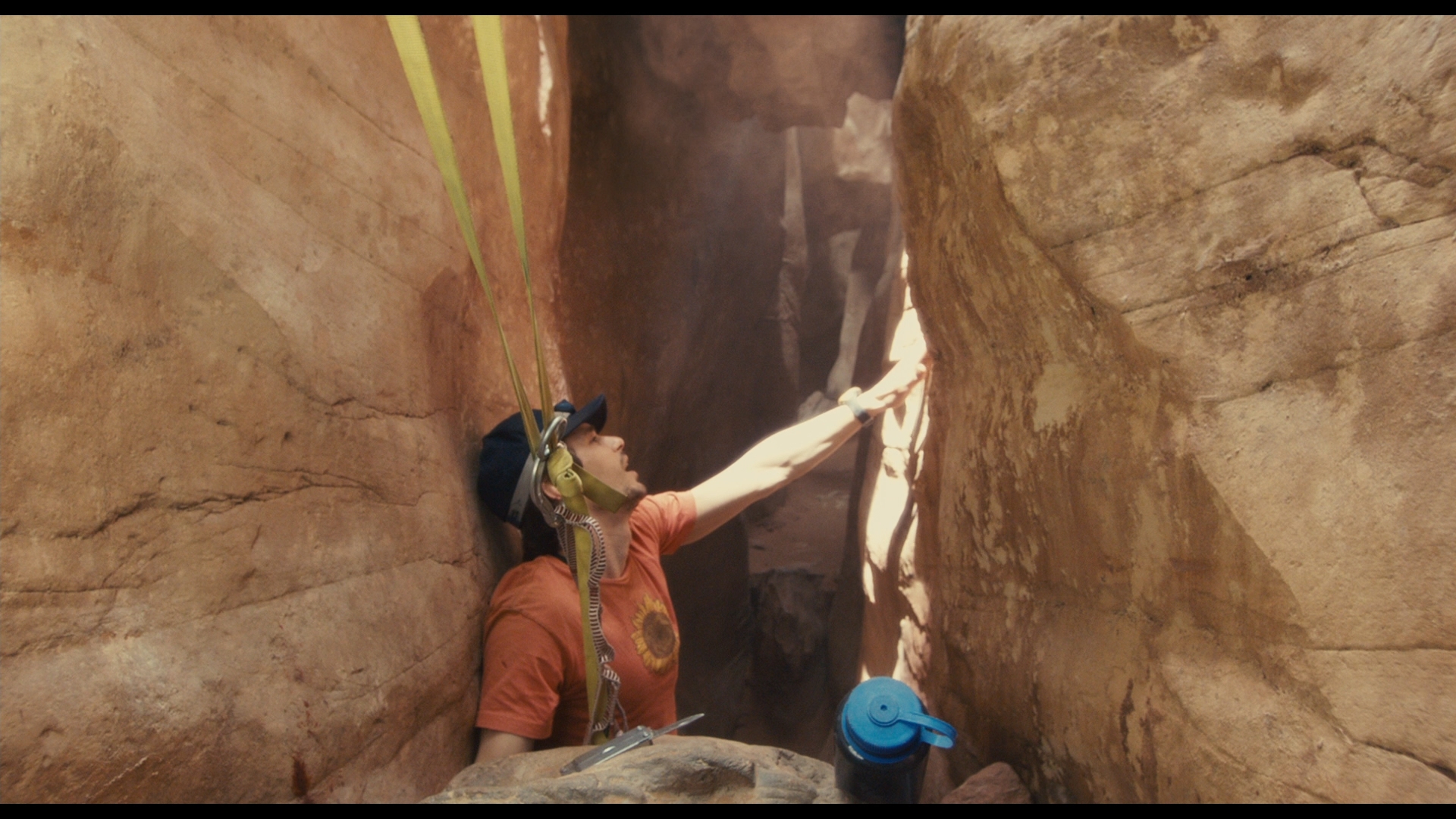 Additionally, the director of 127 hours also uses minimalist lighting effects throughout the film to collaborate with the claustrophobic space to highlight the theme of menace and danger throughout the film, given the space in which to film and the naturalistic approach to telling the true story of Aron, the set therefore restricted lighting choices in it's production. Throughout the film, the only lighting used is positioned above Franco to emulate the light of the ravine. Furthermore, this lighting choice connotes Aron's imprisonment as the light is only a feint glow, leaving nothing but shadows at the base of the ravine, which, coupled with the sense of claustrophobia created by specific camerawork and mise-en-scene, an impending sense of menace is created which blocks in the audience and traps them alongside Franco's character.
Motifs in Thrillers
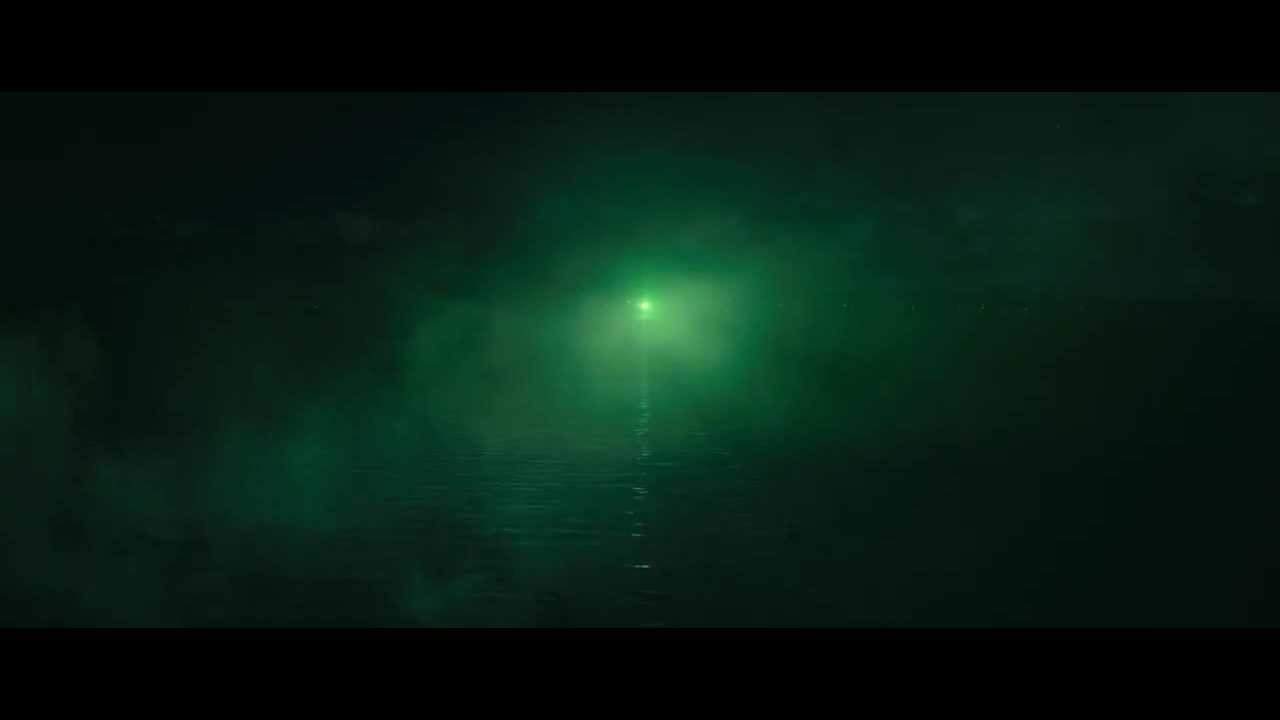 A motif in a piece of media is an important concept, idea or theme, repeated throughout to symbolise a specific message to the audience. In this can range from themes of hope and ideals about the future, for instance, the use of green light in 'The Great Gatsby' to signify his hopes and dreams, to darker, more cynical themes such as the doorway in The Sixth Sense' which is a constant reminder to the character of Cole of his weakness as a child and reference to his first encounter with his mother's ghost and the low angles used to further him as a weak character.
 'Bladerunner' (1982) is set in new-world San Francisco depicting a dystopian future where 'Replicants', androids identical to humans are used on off world colonies as slave labour, but are prohibited from Earth. The film follows Rick Deckard a Bladerunner tasked with hunting down four rouge Replicants that have made their way onto the Earth. Throughout the film the motif of imprisonment and freedom is is shown through specific mise-en-scene choices to suggest how truly imprisoned the people of New San Francisco are by the government and their own society, The scene I have decided to focus on demonstrates such a motif through a panning shot of Deckard in his apartment, hunched over a piano, the collection of mess piled about the piano blocks the view of the rest of the apartment, creating a wall that seals him into such a small space, which further emphasises the motif of imprisonment. To contrast this, as the scene progresses, we, as the audience are thrust into a dream sequence of a unicorn prancing in a forest, that often connotes the idea of freedom in many other media texts. the unicorn is shown to be prancing and seemingly fighting against a force that the audience is blind to, further suggesting the motif of imprisonment and freedom.

Thursday, 17 November 2016
Sound in thrillers
The film follows Jack Torrance, who becomes the caretaker of the Overlook Hotel up in the secluded mountains of Colorado. Jack, being a family man, takes his wife and son to the hotel to keep him company throughout the long and isolated nights. When a snow storm hits, the situation turns from bad to worse as jack is possesed by the evil spiririts of the house.
At first, general dialogue is exchanged between Jack and Wendy and a subtle, echoic, resonant sound is held in the background. Shortly after, a sort of trickling sound scratches its way into the soft ambience in which the two characters are in. That is until Jack asks the question: “What are you doing down here?”. At this point, a build up of the trickling squeaky sounds begins to form a climax – this would stand as the cacophonic underscore of this sequence. This creates an atmosphere of unease and uncertainty.A zooming in close-up shot of Danny appears at the same time Jack further digs into their conversation; as he speaks, Danny foresees a room of blood his voice becomes distorted and harrowing, painting a more disturbed picture of the character whose mind is influenced by dark premonitions. During the delivery of his line, the expression of fear and confusion was set on Danny’s face, which could also trigger the audience to think the same way as him.
Wednesday, 16 November 2016
Camerawork in Thrillers
 'The Bourne Identity', directed by Doug Liman staring Matt Damon as Jason Bourne, a man suffering from extreme memory loss and attempting to discover his true identity amidst a conspiracy within the CIA. Budgeted at $60 million, the film received good overall critical acclaim and grossed a total of $214 million at the box office to American and German audiences.
One particular scene, sequences a fight between Bourne and a CIA assassin. During the scene, 107 cuts are made from shot to shot to simulate and visualise the pace of the action occurring the action cuts between a number of different shot types, Mid-shots are used to show an overview of the action, although these are very short as to allow the audience a glimpse of what is taking place,
close ups to show details of what Jason is doing and to allow us an insight into his skills, as seen when he takes initiative to use a pen to defend himself, long Mid-shots that pan slowly around the action detail to us the events taking place and to show the battle for survival between Jason and the Assassin as well as to show match the two are against each other.
close ups to show details of what Jason is doing and to allow us an insight into his skills, as seen when he takes initiative to use a pen to defend himself, long Mid-shots that pan slowly around the action detail to us the events taking place and to show the battle for survival between Jason and the Assassin as well as to show match the two are against each other.
Subscribe to:
Posts (Atom)
-
 Lighting is a large part of Film Noir, as technology available at the time (1940-1959) prohibited depth in camerawork. To solve this and ...
-
'Anonymous Lead' We deccided on This as our title for our thriller as it limks welll to the overarchhing plot of our thriller, as...
